
The Foundations of the K-Pop Trainee System

The global rise of Korean popular music, widely known as K-pop, has transformed the international entertainment landscape.
Behind the synchronized choreography, flawless vocal performances, and charismatic stage presence of groups like BTS, BLACKPINK, and NewJeans lies a highly structured and rigorous preparatory system.
This system, pioneered by major entertainment agencies, is designed to groom young talents into versatile, multi-talented global artists.
At the heart of this cultural phenomenon is the K-pop idol trainee system.
Unlike Western music industries, where artists often develop independently before signing with a record label, the Korean model identifies raw potential early and shapes it through intensive, long-term preparation.
Aspiring performers from around the world flock to Seoul, dreaming of passing auditions and entering these modern star academies.
However, the path from a hopeful applicant to a debuted idol is incredibly demanding, governed by strict institutional guidelines, rigorous daily routines, and complex legal agreements.
Understanding this ecosystem requires examining the entire pipeline, starting from the initial selection process, moving through the grueling training years, and analyzing the contractual realities that shape the lives of these young artists.
This guide explores the trainee experience, detailing how agencies manage talent, the legal nature of their agreements, and the sacrifices required to stand on the global stage.
Auditions and the Initial Selection Process

Entering the K-pop trainee system begins with the highly competitive audition process.
Major entertainment companies, such as JYP Entertainment, SM Entertainment, YG Entertainment, and HYBE, conduct global auditions to scout talent from various countries, including Japan, China, the United States, and Canada.
Aspiring artists submit video clips showcasing their singing, rapping, or dancing skills through online portals, or they participate in open, on-site auditions.
These events draw thousands of hopefuls, each vying for a limited number of training spots.
The age at which these aspiring performers enter the system is remarkably young.
K-pop trainees are typically signed between the ages of 12 and 22.
This developmental window allows agencies to mold trainees during their formative years, helping them master complex choreography, vocal techniques, and language skills before they reach adulthood.
During these global auditions, casting directors look for physical charisma, vocal potential, rhythmic coordination, and the mental resilience needed to survive the highly competitive industry.
However, securing a spot in a major agency is only the preliminary step of an arduous journey.
It is critical for aspiring artists and their guardians to understand that passing a K-pop audition does not guarantee a debut, income, or a fixed training period.
Many individuals spend years in the system without ever releasing a single song or making a public appearance.
The audition merely grants access to the training facilities and a highly competitive, uncertain development phase where their performance is constantly re-evaluated by instructors.
The transition from a hopeful auditionee to an official trainee marks the beginning of a high-stakes endeavor where talent alone is rarely enough to secure long-term success in this fast-paced industry.
Understanding the Development Contract

Once an applicant successfully passes the audition phase, they must navigate the legal complexities of joining an entertainment agency.
A common misconception is that new trainees immediately sign contracts that guarantee fame and fortune.
In reality, the legal relationship at this stage is strictly educational and preparatory.
K-pop trainees sign a development contract rather than a celebrity career contract.
This distinction is legally and financially significant.
A development contract is designed to outline the terms of the training program, the responsibilities of the agency in providing instruction, and the code of conduct the trainee must follow.
It does not establish an exclusive management relationship for commercial entertainment activities, which is reserved for debuted artists.
Under a development contract, the agency acts as an educational institution, investing capital into the trainee's skills, while the trainee commits to attending classes, maintaining physical fitness, and adhering to company policies.
This legal framework ensures that the agency retains control over the talent development process while minimizing immediate commercial liabilities.
Because these agreements do not guarantee a debut or any form of employment, trainees do not receive a salary or fixed income during this period.
Instead, the contract governs the terms of their preparation, specifying how long the training phase may last and under what conditions it can be terminated.
The document also outlines how the costs incurred during training—such as vocal coaching, dance lessons, language classes, housing, and meals—are tracked.
These accumulated expenses are treated as an investment by the company, which is expected to be recouped later if the trainee successfully debuts and generates revenue.
For minors, who make up a significant portion of the trainee pool, these contracts must be co-signed by parents or legal guardians.
Legal experts emphasize the importance of carefully reviewing these documents, as the terms bind young individuals during crucial years of their education and personal growth.
The development contract establishes the ground rules for a highly demanding lifestyle, setting the stage for the intense physical and mental training that defines the daily routine of a K-pop hopeful.
This initial agreement serves as the legal foundation for their career.
The Daily Grind: Training Schedules and Curriculum

The daily life of a K-pop trainee is characterized by an intense, highly disciplined routine that leaves little room for leisure or personal life.
To meet the high standards of the global music market, K-pop trainees often undergo daily schedules lasting up to 12 hours.
This grueling regimen typically begins early in the morning and extends late into the quiet night, demanding peak physical endurance and mental performance throughout the day.
A typical day at a major agency, such as the JYP Entertainment headquarters or the SM Entertainment training center, is meticulously planned down to the minute.
Trainees who are still in middle or high school must balance their academic responsibilities with their agency schedules.
They attend regular school classes during the day and immediately head to the agency's training facilities in the afternoon, often remaining there until midnight.
For non-Korean trainees or those who have put their formal education on hold, the entire day is dedicated to specialized instruction.
The curriculum is comprehensive and designed to produce well-rounded, international entertainers.
Dance training is exceptionally rigorous, focusing on diverse genres including hip-hop, contemporary, popping, and highly synchronized group choreography.
Trainees spend hours repeating the same dance movements to achieve perfect synchronization.
Vocal and rap lessons focus on breath control, pitch, emotional expression, and adapting to different musical styles, ensuring they can perform live while executing complex choreography.
In addition to physical performance, agencies place a heavy emphasis on global communication and media readiness.
Trainees take intensive foreign language classes, learning Korean, English, Japanese, or Mandarin to ensure they can connect with international fanbases and handle global promotions.
Media training sessions teach trainees how to conduct themselves during interviews, navigate public speaking engagements, and maintain a positive public image on social media platforms.
Furthermore, trainees receive character education and mental conditioning to prepare them for the psychological pressures of fame and public scrutiny.
They are taught how to interact with staff, senior artists, and fans with respect and humility, adhering to strict cultural norms of politeness and professionalism.
Physical fitness and dietary management are also strictly monitored, with trainees undergoing regular weight checks and following controlled meal plans supervised by nutritionists.
This exhausting lifestyle requires immense dedication and sacrifice.
Trainees must sacrifice their social lives, family time, and traditional teenage experiences to focus entirely on their training.
The constant pressure to perform, combined with physical fatigue and the lack of personal freedom, makes the trainee experience one of the most challenging environments in the global entertainment industry, weeding out those who lack the absolute resolve to succeed.
The physical toll is comparable to that of professional athletes.
Despite these hardships, the fierce competition within the agency encourages trainees to push past their physical limits, knowing that any sign of weakness could jeopardize their standing in the company's monthly evaluations.
Evaluation and the Elimination Process
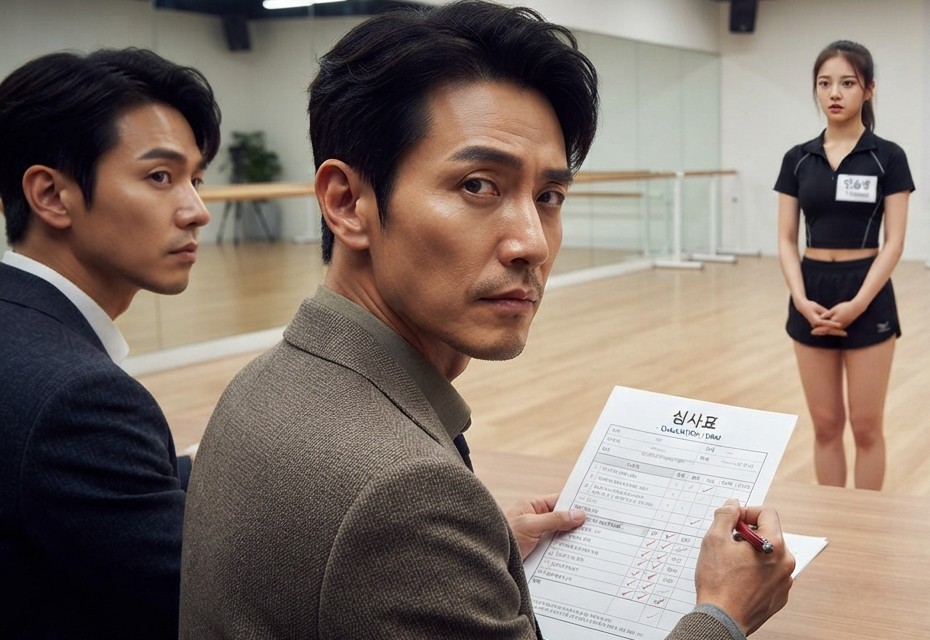
Survival within the trainee system is never guaranteed, as agencies employ a continuous and rigorous evaluation process to filter out those who do not meet their rapidly evolving standards.
Every single month, trainees must perform before a panel of senior instructors, casting directors, and executive managers.
During these monthly evaluations, trainees showcase their progress in dancing, singing, rapping, and language proficiency, receiving direct, constructive, and often blunt feedback on their performance.
These evaluations create a high-stress environment where trainees are constantly compared to their peers.
Those who show rapid improvement, exceptional charisma, and high potential are placed in advanced classes and grouped together for potential debut projects.
Conversely, those who struggle to keep up or fail to show progress are placed on probation, suspended, or dismissed from the agency entirely.
This constant cycle of assessment reinforces the reality that passing a K-pop audition does not guarantee a debut, income, or a fixed training period.
A trainee might spend several years at an agency, passing numerous monthly evaluations, only to be released right before a new group is formed because they do not fit the final concept.
The duration of the training phase is entirely at the discretion of the agency, leaving trainees in a perpetual state of uncertainty regarding their future in the industry.
This lack of job security, combined with the constant threat of elimination, demands an extraordinary level of mental toughness from these young participants.
Consequently, trainees must approach every single monthly evaluation as if it were their final performance on stage.
Financial Structure and the Debt Trap

The financial mechanics of the K-pop trainee system are highly complex and carry significant risks for the young artists involved.
Training a potential idol is an expensive endeavor, requiring substantial capital from the entertainment agency.
Companies invest heavily in top-tier dance choreographers, vocal coaches, language tutors, dormitory housing, food, and styling.
Under the standard business model, these fronted expenses are not charged directly to the trainee as an upfront fee, allowing talented individuals from diverse socioeconomic backgrounds to enter the system.
However, this financial arrangement is far from a free education.
The accumulated costs are carefully tracked as a debt associated with the trainee's development.
If a trainee successfully debuts, these costs are typically recouped from the group's initial earnings before the artists receive their first profit distribution.
The situation becomes far more perilous if a trainee decides to walk away from the system before their contract expires.
Leaving a K-pop training contract early requires paying back accumulated debt.
This repayment clause serves as a powerful deterrent against contract termination.
If a trainee decides the lifestyle is too difficult, or if they wish to move to another agency, they or their families may face substantial financial claims from the company to recover the training costs incurred over months or years.
For many families, these accumulated expenses can amount to substantial financial sums, making it financially impossible for the trainee to leave voluntarily without facing severe economic hardship.
This financial structure creates a significant power imbalance.
Trainees often feel compelled to endure extreme schedules and personal hardships because they cannot afford the financial penalty of leaving.
While major agencies like SM Entertainment or JYP Entertainment have modernized their practices to absorb more of these risks, smaller or mid-sized agencies may enforce these debt-recovery clauses strictly, leaving young trainees trapped in agreements they no longer wish to pursue.
Aspiring idols and their guardians must thoroughly investigate the financial terms of any development contract before signing to avoid long-term financial distress.
Understanding the exact breakdown of what constitutes reimbursable training expenses is vital, as vague contractual definitions can lead to inflated debt calculations during disputes.
Ultimately, this debt-recovery mechanism ensures that agencies protect their capital investments.
The Road to Debut: Group Formation and Concept

For the select few who survive the grueling years of evaluations and financial pressures, the final phase of the trainee journey is group formation.
When an agency decides to launch a new idol group, producers select trainees who complement each other in terms of skills, visuals, and personality.
This process involves extensive screen testing, recording trial tracks, and analyzing group dynamics to ensure a cohesive unit.
The agency determines the group's overall concept, which can range from futuristic and edgy to bright and youthful.
Roles are assigned based on each trainee's strengths, designating leaders, main vocalists, lead dancers, and rappers.
In some cases, agencies utilize public survival television shows, such as those broadcast on major networks like Mnet or JTBC, to let international viewers vote on the final group lineup, generating immense pre-debut buzz and building an active fanbase.
Once the final lineup is secured, trainees transition from their initial development contract to an exclusive celebrity career contract.
This new agreement marks their official transition from students to professional artists.
It outlines the profit-sharing ratios, the duration of their exclusive representation, and the agency's commitment to managing their commercial activities, music releases, and public appearances.
The debut is a monumental milestone, but it also marks the beginning of a completely new set of professional challenges and intense market competition.
The preparation for the debut showcase and the first music television appearance requires absolute focus, as their initial reception determines their long-term viability.
Legal Protections and Regulatory Reforms

The K-pop industry's contractual practices have historically faced severe criticism, leading to significant regulatory reforms in South Korea.
In the early eras of the industry, long-term agreements lasting over a decade—often referred to as "slave contracts"—were common, leaving artists with minimal control over their careers and unfair profit-sharing arrangements.
In response to public outcry, high-profile lawsuits, and intense media scrutiny, the South Korean Fair Trade Commission intervened to establish a healthier, more transparent regulatory framework for everyone involved.
The Fair Trade Commission introduced a standard exclusive contract template for the entertainment industry, which caps the maximum duration of an artist's contract to a legally mandated limit of years.
This standard template also includes provisions to protect the basic human rights of trainees and artists, particularly minors.
It mandates that agencies must respect the educational rights of underage trainees, ensure they receive adequate sleep, and prevent any form of physical or emotional abuse.
Despite these regulatory improvements, enforcement remains a challenge, particularly among smaller, independent agencies that operate with limited oversight.
While major corporations like HYBE and YG Entertainment generally comply with standard templates to protect their corporate reputation and maintain ethical standards, smaller agencies may still include unfavorable clauses, hide hidden fees, or find loopholes in the regulations to maximize their leverage over young talents.
Furthermore, the legal distinction between a development contract and an exclusive celebrity contract means that trainees do not always benefit from the same level of regulatory protection as debuted artists.
Because trainees are not yet classified as active celebrities, some agencies argue that standard artist protection clauses do not fully apply to them during the preparation phase.
This regulatory gap underscores the necessity for continuous legal monitoring and the implementation of more robust oversight mechanisms to safeguard the welfare of all young participants in the idol training ecosystem.
Advocacy groups and legal experts continue to lobby for stronger legislative protections that explicitly cover the pre-debut phase, ensuring that trainees are shielded from financial exploitation and excessive work hours from the moment they enter an agency.
Life After Debut and the Reality of Success

While achieving a debut is a dream realized, the reality of life as a debuted K-pop artist is often starkly different from the glamorous image projected in music videos and on social media platforms like Instagram and TikTok.
Standing on stage at major music broadcasts, such as SBS Inkigayo or Mnet M Countdown, is an incredible achievement, but it represents the beginning of a fierce commercial struggle.
The global music market is highly saturated, with numerous new groups debuting every year, all competing for the limited attention of fans and media outlets.
This dynamic makes the transition from trainee to active idol a challenging period of professional adjustment.
One of the most immediate challenges for newly debuted idols is financial survival.
Despite releasing albums and performing on music shows, many artists do not receive any income immediately after their debut.
Under the traditional recoupment system, the agency uses the group's initial revenues to pay off the massive accumulated debt incurred during their trainee years.
This debt includes the costs of music production, music video filming, marketing campaigns, styling, and daily living expenses.
For groups from smaller agencies, it can take years of continuous promotions, concert tours, and brand endorsement deals to break even and begin earning a profit.
The physical and psychological demands of a debuted idol are even more intense than those of a trainee.
Idols must maintain a flawless public image, navigate constant media scrutiny, and deal with the invasive behavior of obsessive fans, known as "sasaeng fans." The pressure to stay relevant forces groups to maintain a relentless schedule of comebacks, variety show appearances, fan meetings, and international tours, often leading to severe physical exhaustion and mental health issues.
Major agencies have started to address this by offering psychological counseling and temporary health hiatuses, but the fundamental nature of the industry remains highly stressful.
Furthermore, the career lifespan of a K-pop group is notoriously short.
The standard contract limit set by the Fair Trade Commission often acts as a critical turning point, widely referred to by fans as a major contract renewal milestone.
This milestone often determines whether a group achieves lasting legacy status or fades into memory.
When contracts expire, many groups disband or lose members as individuals choose to pursue solo careers, acting, or leave the entertainment industry entirely.
Only a small percentage of groups, such as TWICE or SEVENTEEN, successfully renew their contracts and maintain their popularity beyond this initial period.
Ultimately, the K-pop idol trainee system is a high-risk, high-reward ecosystem.
It has undeniably produced some of the world's most talented and successful entertainers, driving the global Hallyu wave and generating billions of dollars in economic value.
However, this success is built on the sacrifices of thousands of young hopefuls who enter the system with dreams of stardom.
For every global superstar, there are countless trainees who leave the system with unfulfilled dreams and financial liabilities.
A realistic understanding of the training process, the contractual obligations, and the post-debut realities is essential for anyone wishing to navigate or truly comprehend this fascinating yet demanding industry.
답글 남기기