
The Evolution of the Korean Mid-Size SUV Market

The Korean mid-size SUV market has evolved from a utilitarian segment into the most competitive battleground in the global automotive industry.
Families and commuters alike seek vehicles that balance fuel economy, interior volume, safety technology, and long-term financial viability.
Major domestic manufacturers like Hyundai Motor Company and Kia Corporation have refined their lineups to offer diverse options, ranging from entry-level family crossovers to near-luxury highway cruisers.
At the same time, premium sub-brands like Genesis and import options from Japan and Germany challenge these domestic giants, forcing a rapid pace of innovation.
Selecting the right vehicle requires looking past styling to evaluate real-world performance, cabin utility, and long-term operating costs.
In this comprehensive analysis, we examine the core contenders in the Korean mid-size SUV space.
We will dissect the performance profiles, interior space arrangements, and financial metrics of popular options, including the Hyundai Tucson, Kia Sportage, Hyundai Santa Fe, and Kia Sorento.
We will also explore the premium tier represented by the Genesis GV70 and compare these domestic favorites with prominent imported alternatives such as the Toyota RAV4, Mercedes-Benz GLC, BMW X3, and Audi Q5.
By looking at concrete metrics like fuel efficiency, cumulative maintenance expenses, and five-year residual values, prospective buyers can make an informed choice that aligns with both daily driving habits and household budgets.
Choosing an SUV in this category is no longer just about engine size or cargo capacity.
Modern buyers utilize online platforms like Encar and K-Car to trade in their old vehicles and research market trends, making long-term value retention a critical factor.
Additionally, advanced driver assistance suites, such as Hyundai SmartSense and Kia Drive Wise, have become standard expectations rather than optional luxuries.
This comparison provides a detailed roadmap through the complex landscape of mid-size SUVs, helping you identify which vehicle fits your lifestyle, whether you prioritize maximum fuel efficiency for daily city commuting or superior cabin flexibility for weekend family trips.
Ultimately, the right choice depends on balancing the upfront purchase price against the ongoing expenses of fuel, insurance, and routine servicing over half a decade of ownership.
The Entry Segment: Hyundai Tucson vs. Kia Sportage

The entry point of the mid-size segment is occupied by two closely related but stylistically distinct siblings: the Hyundai Tucson and the Kia Sportage.
Although they share a common platform and underlying powertrain architectures, they target different driver demographics through divergent design philosophies and cabin layouts.
The Hyundai Tucson utilizes Hyundai's Sensuous Sportiness design language, featuring a distinctive parametric jewel grille that integrates hidden daytime running lights.
Inside, the Tucson offers a dual-screen layout with a digital instrument cluster and a central infotainment screen, both running the latest Hyundai infotainment system with seamless Apple CarPlay and Android Auto integration.
In terms of performance and efficiency, the Hyundai Tucson delivers a solid fuel efficiency of 14.2 km/L, making it a highly practical choice for suburban families and daily commuters.
When it comes to long-term financial planning, the Tucson retains a five-year residual value of 55%.
This depreciation rate is typical for the highly competitive compact-to-mid-size crossover segment, where high sales volumes mean a steady supply of vehicles on the used market.
For buyers tracking their long-term outlays, the five-year total cost of ownership for the Hyundai Tucson is 70 million KRW, representing a highly accessible entry point for a modern, tech-focused family vehicle.
On the other side of the showroom floor, the Kia Sportage presents a more aggressive and avant-garde exterior with its unique boomerang-shaped LED headlights and signature Tiger Nose grille.
The cabin of the Sportage feels remarkably premium, featuring a curved panoramic display that sweeps across the driver's side of the dashboard.
This design mimics the setup found in luxury vehicles, providing an ergonomic layout that places critical navigation and vehicle settings within easy reach of the driver.
The Kia Sportage edges out its sibling slightly in fuel economy, achieving a fuel efficiency of 14.8 km/L. This marginal advantage can add up to noticeable savings over years of daily highway commuting.
Like the Tucson, the Kia Sportage maintains a five-year residual value of 55%, reflecting its consistent demand and solid reputation for reliability in the secondary market.
Both vehicles utilize advanced safety features, including Forward Collision-Avoidance Assist, Lane Keeping Assist, and Blind-Spot Collision-Avoidance Assist, ensuring peace of mind on congested urban expressways.
When deciding between these two, the choice often comes down to aesthetic preference and specific cabin ergonomics.
The Tucson appeals to those who favor clean, integrated lines and a futuristic dashboard design, while the Sportage attracts buyers looking for a sportier exterior presence and a driver-centric, curved screen layout.
Whichever you select, both platforms deliver exceptional interior space, with rear-seat legroom and cargo capacities that rival larger SUVs from previous generations, thanks to the optimization of their shared platform.
Under the hood, both models offer versatile powertrain choices, including the highly popular 1.6-liter turbocharged hybrid system, which pairs an electric motor with a six-speed automatic transmission to optimize low-speed torque and fuel economy.
The suspension tuning differs slightly between the two, with the Tucson leaning toward a compliant, comfortable ride that absorbs road imperfections smoothly, while the Sportage features a slightly firmer setup designed to deliver more engaging handling characteristics around tight corners and highway ramps.
The Family Workhorses: Kia Sorento vs. Hyundai Santa Fe

Moving up to the larger, three-row family segment brings us to the ultimate domestic showdown: the Kia Sorento versus the Hyundai Santa Fe.
These two vehicles represent the pinnacle of family transportation in Korea, offering expansive cabins, versatile seating configurations, and advanced convenience features designed for long road trips.
Kia launched the fourth-generation Sorento in 2020, establishing a new benchmark for mid-size SUVs with its rugged, blocky styling, refined platform, and upscale interior materials.
The Sorento quickly became a best-seller, appealing to families who needed more space than a compact crossover but wanted to avoid the footprint of a large minivan.
The Kia Sorento offers a highly balanced package, achieving a fuel efficiency of 13.5 km/L. This efficiency is impressive for a vehicle of its size and weight, particularly when equipped with the smart hybrid powertrain.
In terms of long-term value, the Sorento stands out with a five-year residual value of 60%, indicating exceptionally strong demand on used car platforms like Encar.
This high residual value is a testament to the vehicle's enduring popularity and reputation for durability.
For families calculating their multi-year budgets, the five-year total cost of ownership for the Kia Sorento is 78 million KRW, positioning it as a highly cost-effective option when considering its size, utility, and resale value.
The Hyundai Santa Fe, which underwent a radical redesign featuring a bold, boxy, retro-futuristic exterior with H-shaped LED lighting signatures, takes a different approach to family hauling.
The Santa Fe prioritizes maximizing interior volume, resulting in a tailgate opening that is exceptionally wide, perfect for camping, tailgating, or loading bulky sports equipment.
Inside, the Santa Fe offers a clean, minimalist dashboard with dual wireless smartphone charging pads and an abundance of storage cubbies.
However, the Santa Fe's boxier aerodynamics and heavier profile impact its efficiency, resulting in a fuel efficiency of 12.2 km/L. This makes it slightly more expensive to fuel over long distances compared to its Kia cousin.
The Hyundai Santa Fe has a five-year residual value of 55%, matching the compact crossovers but falling slightly behind the Sorento's exceptional market hold.
This difference in residual value can be attributed to the polarizing exterior design of the Santa Fe, which, while highly functional, does not appeal universally to all buyers in the pre-owned market.
Both vehicles offer flexible seating layouts, allowing buyers to choose between a traditional seven-seat configuration or a luxurious six-seat setup featuring second-row captain's chairs.
These captain's chairs can be equipped with heating, ventilation, and one-touch relaxation modes, transforming the second row into a first-class cabin experience.
The Sorento and Santa Fe also feature advanced climate control systems, including independent third-row air conditioning vents and USB-C charging ports for every passenger, ensuring that all occupants remain comfortable and connected throughout the journey.
When driving on the highway, both vehicles feel incredibly stable, utilizing acoustic laminated glass to isolate the cabin from wind and road noise.
The Sorento's suspension is tuned to provide a buttoned-down, controlled ride that minimizes body roll through corners, making it feel smaller from behind the wheel than it actually is.
In contrast, the Santa Fe prioritizes plush, pillowy ride comfort, absorbing large bumps and highway expansion joints with ease.
Both models come equipped with advanced safety suites, including Highway Driving Assist, which combines adaptive cruise control with lane-centering technology to reduce driver fatigue during long family road trips.
The Premium Tier: Genesis GV70 vs. European Imports
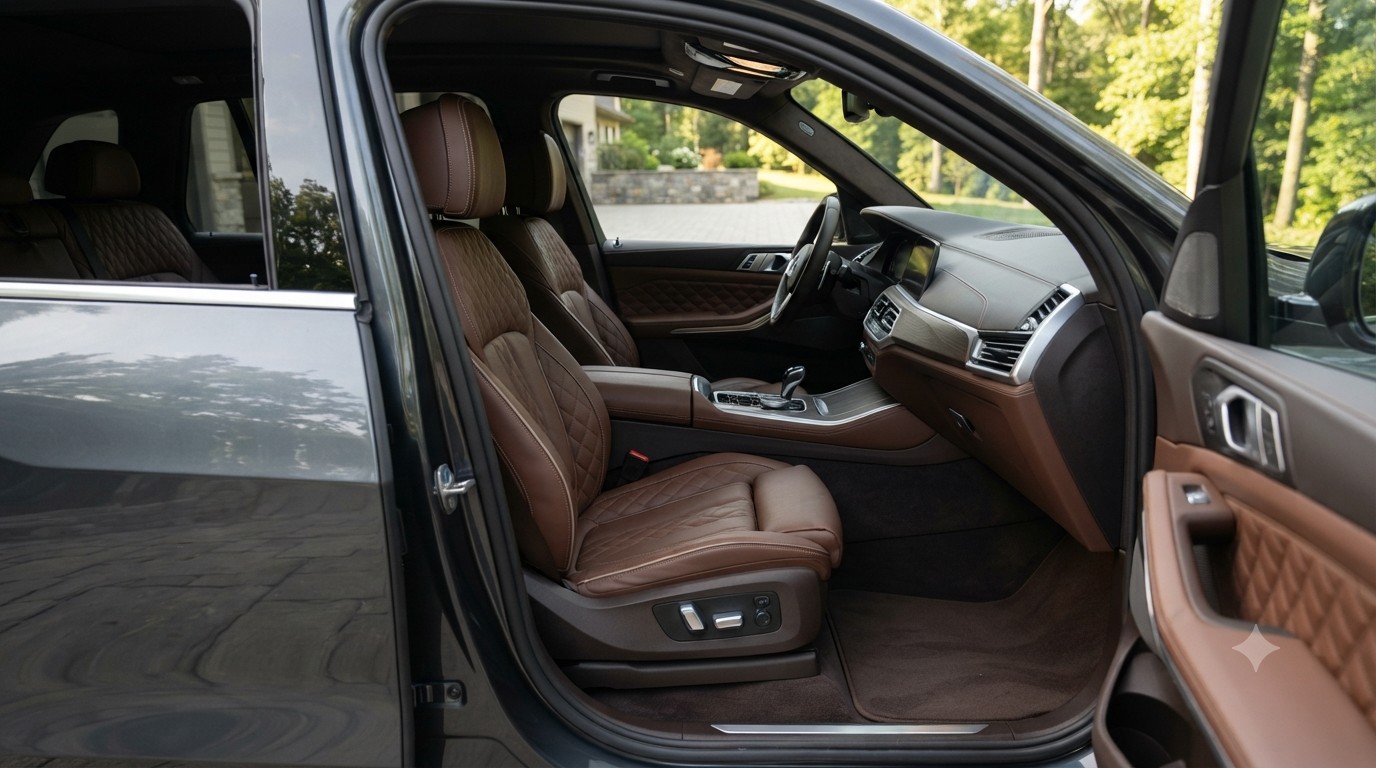
For buyers seeking a premium driving experience without stepping into imported luxury territory, the Genesis GV70 presents a compelling domestic alternative.
As the premium division of Hyundai, Genesis has established itself as a legitimate competitor to established European brands.
The GV70 features the brand's signature Athletic Elegance design language, highlighted by the double-lined Crest Grille and Quad Lamps, giving it a commanding and sophisticated road presence.
Inside, the cabin is a showcase of Korean craftsmanship, featuring high-quality leather upholstery, ambient mood lighting, and a wide-screen infotainment system controlled by a tactile rotary dial.
From a financial standpoint, the Genesis GV70 offers an attractive value proposition when compared to its European peers.
The Genesis GV70 has a five-year residual value of 60%, matching the highly popular Kia Sorento and demonstrating strong demand in the premium pre-owned market.
Over five years, the total cost of ownership for the Genesis GV70 is 100 million KRW.
While this is higher than the mainstream domestic options, it is significantly more affordable than importing a premium European SUV once you factor in initial purchase price, options packages, and long-term upkeep.
One of the most significant advantages of choosing the GV70 over European competitors lies in its maintenance expenses.
Genesis GV70 maintenance costs are 30% lower than the GLC and X3.
This difference becomes highly pronounced after the initial warranty period expires, as domestic parts and service networks are far more accessible and cost-effective.
To put this in perspective, the five-year cumulative maintenance cost for the GLC is 15 million KRW, while the five-year cumulative maintenance cost for the X3 is 14 million KRW.
Even the Audi Q5, known for slightly more accessible servicing, incurs a five-year cumulative maintenance cost of 12 million KRW.
These high maintenance costs for European imports stem from the premium pricing of imported replacement parts, specialized labor rates at authorized service centers, and the complexity of their mechanical systems.
In contrast, GV70 owners benefit from the expansive Hyundai service network, allowing them to service their vehicles at specialized Genesis Bluehands locations across the country.
This network ensures faster turnaround times and lower labor rates, without sacrificing the premium service experience.
Furthermore, the GV70 does not compromise on performance or technology.
It offers dynamic driving characteristics, especially when equipped with the AWD system and the electronic limited-slip differential.
The vehicle features Preview Electronic Control Suspension, which uses a front camera to scan the road ahead and adjust the damping force of the suspension in real-time, ensuring a smooth ride over speed bumps and uneven surfaces.
The interior technology is equally impressive, featuring a fingerprint authentication system that allows drivers to start the vehicle and load their personalized seat, mirror, and climate settings without needing a physical key.
Additionally, the GV70 includes advanced safety systems such as Forward Collision-Avoidance Assist 2, which can detect oncoming traffic at intersections and provide evasive steering assist to prevent accidents.
The Import Alternative: Toyota RAV4 Hybrid

While domestic options dominate Korean roads, the Toyota RAV4 remains a highly popular import alternative, particularly for buyers who prioritize ultimate fuel efficiency and proven hybrid reliability.
The RAV4 features a rugged, geometric exterior design that contrasts sharply with the sleek, fluid lines of Korean crossovers.
Equipped with Toyota's legendary Hybrid Synergy Drive system, the RAV4 utilizes a highly efficient 2.5-liter four-cylinder engine paired with electric motors to deliver seamless power and exceptional fuel economy.
The standout feature of the Toyota RAV4 is its efficiency, achieving an outstanding fuel efficiency of 16.7 km/L. This performance easily surpasses the hybrid variants of its Korean competitors, making the RAV4 an ideal choice for high-mileage drivers who spend a significant amount of time in stop-and-go city traffic.
In addition to fuel savings, the RAV4 holds its value exceptionally well, boasting a five-year residual value of 67%.
This high resale value is driven by Toyota's global reputation for bulletproof reliability and low mechanical failure rates.
For buyers considering this import, the five-year total cost of ownership for the Toyota RAV4 is 85 million KRW.
While this is higher than the Tucson's 70 million KRW or Sorento's 78 million KRW, the RAV4 offsets its higher initial import price with its superior fuel economy and slow depreciation.
The RAV4 also features a spacious cabin with straightforward, physical controls that are easy to operate while driving.
While it may lack some of the ultra-modern dual-screen layouts and high-tech features found in the Sportage or Tucson, the RAV4 appeals to pragmatic buyers who value long-term dependability and minimal fuel station visits above all else.
Technological Innovations and Driver Assistance

Modern mid-size SUVs are defined as much by their software and safety technology as they are by their mechanical platforms.
Hyundai and Kia have equipped their latest models with some of the most advanced driver assistance systems available today, grouped under the Hyundai SmartSense and Kia Drive Wise suites.
These systems utilize a network of radar sensors, ultrasonic sensors, and high-resolution cameras to monitor the vehicle's surroundings in real-time, actively working to prevent collisions and reduce driver stress during long commutes.
A key feature of these safety suites is Highway Driving Assist II (HDA II).
This system combines adaptive cruise control with lane-centering assist and GPS navigation data to automatically adjust the vehicle's speed based on highway speed limits and upcoming curves.
It also includes a lane-change assist feature; when the driver activates the turn signal, the vehicle will safely steer itself into the adjacent lane once sensors confirm the path is clear.
Additionally, the Remote Smart Parking Assist system allows drivers to stand outside the vehicle and use the smart key fob to guide the SUV into or out of tight parking spaces, a highly valuable feature in crowded Korean parking garages.
Furthermore, the Blind-Spot View Monitor projects a live video feed of the blind spots directly onto the digital instrument cluster when the turn signal is active, eliminating blind spots when merging.
Depreciation and Long-Term Residual Value

When purchasing a new vehicle, understanding depreciation and residual value is crucial for protecting your financial investment.
The mid-size SUV segment displays a wide variance in how well different models retain their value over a five-year ownership cycle.
The undisputed leader in value retention among the compared models is the Toyota RAV4, which maintains an exceptional five-year residual value of 67%.
This strong performance in the secondary market means that owners will recoup a significantly higher portion of their initial investment when it comes time to trade in or sell the vehicle on pre-owned car platforms.
Among domestic options, the Kia Sorento and the Genesis GV70 lead the pack with a solid five-year residual value of 60%.
The Sorento's strong performance is driven by its massive popularity as a family vehicle, ensuring a constant stream of buyers in the used car market.
The GV70 benefits from the premium positioning of the Genesis brand, which has successfully established a reputation for luxury and build quality that holds up well over time.
In contrast, the Hyundai Tucson, Kia Sportage, and Hyundai Santa Fe all post a five-year residual value of 55%.
While this is a respectable figure that aligns with industry averages for mass-market crossovers, it means these models will experience slightly faster depreciation than the Sorento or GV70.
For the Santa Fe, the lower residual value compared to the Sorento can be attributed to its polarizing retro-futuristic exterior design, which may not appeal to as broad a segment of used car buyers.
For the Tucson and Sportage, the high volume of new car sales leads to a more saturated used market, which naturally puts downward pressure on resale prices.
Understanding these dynamics allows buyers to factor depreciation into their overall financial calculations.
By selecting a model with higher residual value, buyers can lower their overall cost of ownership, as depreciation represents the largest expense of owning a new car over five years.
Financial Breakdown and Final Purchase Decision

To make a fully informed purchasing decision, it is essential to analyze the complete financial picture of ownership, which extends far beyond the initial sticker price.
By examining the five-year total cost of ownership (TCO) alongside fuel efficiency and maintenance expectations, we can match specific vehicles to different driving habits and household budgets.
The five-year TCO represents the sum of the vehicle's purchase price, fuel costs, routine maintenance, insurance, and taxes, minus its projected residual value at the end of the five-year period.
For budget-conscious buyers, the Hyundai Tucson represents the most accessible entry point with a five-year total cost of ownership of 70 million KRW.
Combined with its practical fuel efficiency of 14.2 km/L and a residual value of 55%, the Tucson is an excellent option for young families or individuals who want a modern, tech-focused SUV without a heavy monthly financial burden.
Its sibling, the Kia Sportage, offers an even higher fuel efficiency of 14.8 km/L, which can translate to additional fuel savings over time, making it highly competitive in this budget tier.
Families requiring more space and seating flexibility will find the Kia Sorento to be a highly balanced financial choice.
With a five-year total cost of ownership of 78 million KRW, the Sorento offers significantly more cabin space, third-row seating options, and a premium interior for a moderate step up in cost.
Its strong five-year residual value of 60% and respectable fuel efficiency of 13.5 km/L make it a highly stable financial asset that holds its value well.
The Hyundai Santa Fe, while offering exceptional cargo utility, comes with a lower fuel efficiency of 12.2 km/L and a lower residual value of 55%, making it slightly more expensive to operate and own over the long term compared to the Sorento.
For those who prioritize fuel economy and long-term mechanical simplicity, the Toyota RAV4 presents a strong import case.
With a five-year total cost of ownership of 85 million KRW, the RAV4 is more expensive upfront than the domestic options, but it rewards owners with an outstanding fuel efficiency of 16.7 km/L and an industry-leading five-year residual value of 67%.
This makes the RAV4 the ideal choice for high-mileage commuters who want to minimize fuel expenses and protect their investment against steep depreciation.
Finally, the premium segment is anchored by the Genesis GV70, which carries a five-year total cost of ownership of 100 million KRW.
While this represents a significant financial step up, the GV70 justifies its premium pricing with a strong five-year residual value of 60% and maintenance costs that are 30% lower than its European rivals, the Mercedes-Benz GLC and BMW X3.
Given that five-year cumulative maintenance costs reach 15 million KRW for the GLC, 14 million KRW for the X3, and 12 million KRW for the Q5, the GV70 offers a highly rational way to enjoy luxury driving without the exorbitant repair bills associated with European imports.
Ultimately, the best choice depends on your specific lifestyle.
If daily commuting distance is high, the RAV4 or Sportage Hybrid will deliver the best fuel savings.
If maximum family utility and cargo space are required, the Sorento stands out as the financial and practical champion.
For those seeking premium refinement with predictable domestic upkeep, the Genesis GV70 is unmatched.
By carefully weighing these concrete financial metrics against your daily driving needs, you can select the perfect mid-size SUV that fits your driveway and your financial goals.
답글 남기기