
Gochujang
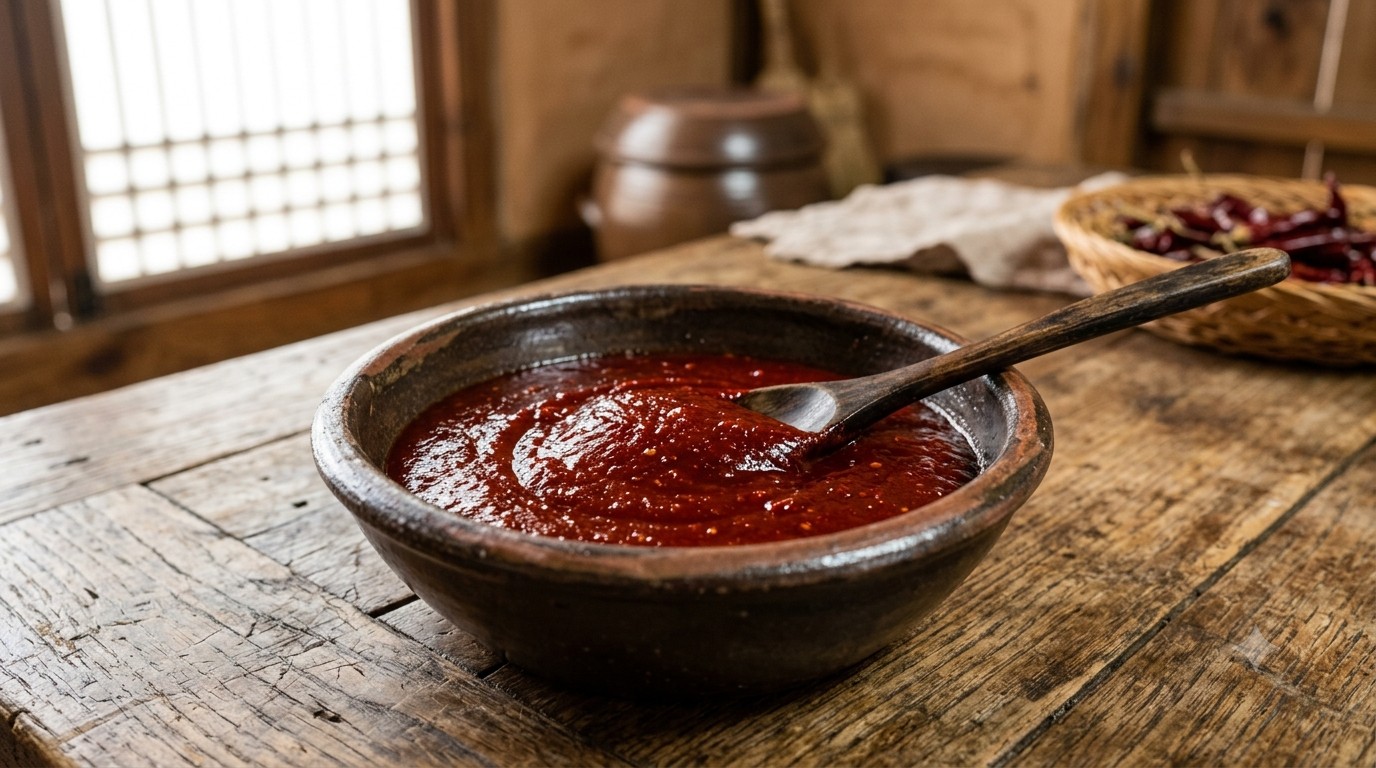
Gochujang is a thick, deep red, fermented chili paste that serves as the backbone of Korean cuisine.
Crafted from red chili powder, glutinous rice, fermented soybeans, and salt, it undergoes a meticulous fermentation process that transforms these simple elements into a complex flavor powerhouse.
Unlike Western hot sauces that rely heavily on vinegar for a sharp, acidic bite, Gochujang offers a thick, sticky texture characterized by a deep, savory umami profile, a subtle natural sweetness from the broken-down starches of the glutinous rice, and a lingering, warm heat.
This ingredient is not just a condiment to be drizzled at the end; it is a foundational building block that must be cooked into dishes to allow its flavors to bloom fully.
You will find yourself reaching for Gochujang when preparing classic comfort foods like Tteokbokki (spicy rice cakes), Bibimbap sauce, and Jeyuk Bokkeum (spicy stir-fried pork).
To see how it works in practice, consider the process of making Tteokbokki.
You begin by simmering a savory broth made from dried anchovies and kelp.
Once the broth is ready, you whisk in a generous scoop of Gochujang, such as the one produced by the popular brand O'Food, alongside a touch of sugar and soy sauce.
As the mixture simmers, you add chewy cylinder-shaped rice cakes, fish cakes, and sliced scallions.
The heat coaxes out the paste's sugars, causing the sauce to reduce into a thick, glossy, and highly concentrated glaze that clings beautifully to the rice cakes.
A frequent mistake made by beginners is treating Gochujang as a direct substitute for other hot sauces, such as Sriracha or Thai chili paste.
Sriracha is highly acidic and runny, which will completely ruin the texture and balance of a traditional Korean stew or stir-fry, leaving it watery and unpleasantly sour.
Another common error is storing Gochujang in a warm pantry cupboard after opening the container.
Because it is a fermented product containing active cultures and natural sugars, keeping it in a warm environment can cause it to continue fermenting rapidly, which alters its flavor, darkens its color to an unappealing dark brown, and can eventually lead to mold growth.
To preserve its vibrant red hue and optimal flavor balance, always wipe down the rim of the tub and store it securely sealed in the refrigerator.
Fortunately, finding this essential ingredient is easier than ever, as Gochujang is widely sold at major grocery stores including Whole Foods, Trader Joe's, and Kroger.
Gochugaru
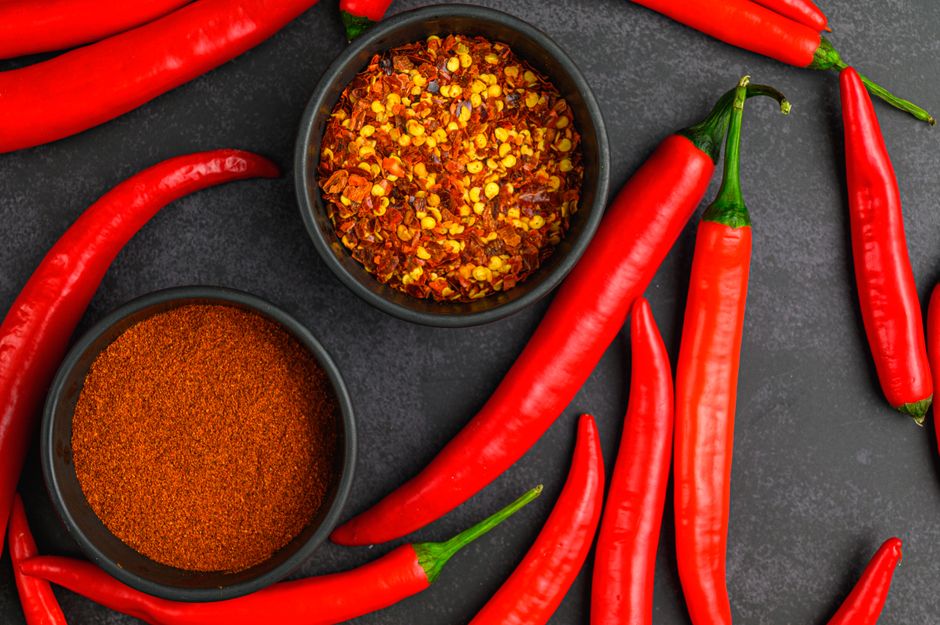
Gochugaru, or Korean chili flakes, is a vibrant, sun-dried chili pepper powder that is fundamentally different from Western crushed red pepper.
It is produced by drying Korean red chili peppers, removing the seeds, and grinding them to various levels of coarseness.
It possesses a bright crimson color, a smoky-sweet aroma, and a mild-to-moderate heat level that does not overwhelm the palate.
Gochugaru comes in two primary varieties: coarse grind, which is highly textured and used for everyday dishes and kimchi-making, and fine grind, which is a smooth, flour-like powder reserved for sleek sauces, elegant cold soups, and certain types of tteokbokki where a smooth appearance is desired.
This spice is absolutely critical whenever you want to infuse a dish with heat, smoky depth, and a brilliant red color without adding moisture or altering the viscosity.
A prime scenario for coarse Gochugaru is making Sundubu Jjigae (soft tofu stew).
To prepare this, you start by gently heating a pot with sesame oil and minced garlic.
You then add a generous portion of Gochugaru, such as the highly regarded variety from the brand Taekyung, and stir-fry the mixture over low heat for about thirty seconds.
This step is crucial because it blooms the chili flakes in the warm oil, creating a fragrant, deep red chili oil that serves as the flavorful base for the stew.
From there, you pour in a light kelp broth, toss in seafood or pork, and slide in delicate cylinders of silken tofu, resulting in a beautifully red, aromatic broth.
The most damaging mistake you can make with Gochugaru is substituting it with standard Western crushed red pepper flakes or cayenne pepper powder.
Western red pepper flakes are dried with their seeds intact, making them incredibly sharp, intensely spicy, and dry, with a yellow-orange cast that fails to provide the deep, rich red color essential to Korean dishes.
Cayenne pepper, on the other hand, is far too hot and completely lacks the smoky, fruity sweetness that defines authentic Korean cooking.
Furthermore, many home cooks make the mistake of keeping their bulk bag of Gochugaru in a warm, lit pantry.
Due to its natural oils, Gochugaru is highly susceptible to oxidation, which causes it to lose its vibrant red color, turn a dull, dusty brown, and develop a stale, cardboard-like taste.
To maintain its freshness, keep a small portion in a jar in your kitchen cupboard for immediate use, and store the rest of the bag tightly sealed in the freezer.
Ganjang
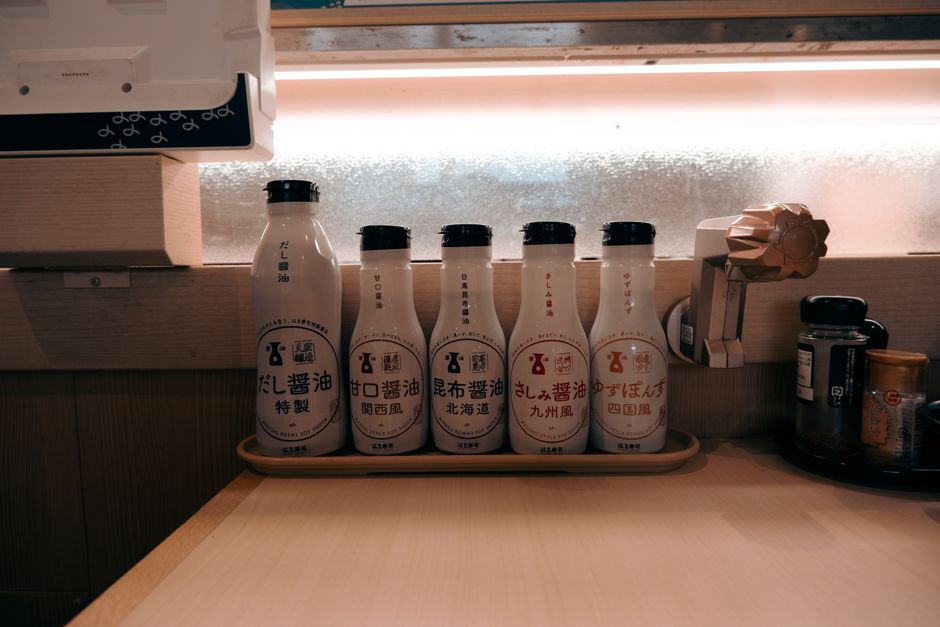
Ganjang, or Korean soy sauce, is the liquid lifeblood of Korean seasoning, providing essential salt, moisture, and deep umami.
Seasoned home cooks identify up to 26 essential Korean cooking ingredients, including 14 absolute essentials that form the bedrock of the cuisine, and soy sauce is chief among them.
To navigate Korean cooking successfully, you must understand that there are three distinct types of Ganjang, each designed for specific culinary applications: Yangjo-ganjang (naturally brewed soy sauce), Jin-ganjang (mixed or chemically brewed soy sauce that is highly heat-stable), and Guk-ganjang (soup soy sauce, which is a byproduct of making doenjang, characterized by its light color and intense saltiness).
Yangjo-ganjang is best applied in raw or lightly heated scenarios where its delicate, aromatic flavor can shine, such as in dipping sauces, cold noodle dressings, or light marinades.
For instance, when making a dipping sauce for crispy savory pancakes (Jeon), you would combine a high-quality brewed soy sauce, such as Sempio or Kikkoman, with rice vinegar, toasted sesame seeds, chopped scallions, and a pinch of chili flakes.
On the other hand, Jin-ganjang is the go-to choice for long-simmered dishes like Galbi-jjim (braised short ribs) because its flavor profile does not break down or turn bitter under prolonged, intense heat.
Guk-ganjang is reserved exclusively for seasoning soups and stews, allowing you to achieve the perfect level of salinity without turning a delicate, clear broth into a muddy, dark brown liquid.
A catastrophic mistake in the kitchen is treating these three types of soy sauce as interchangeable.
If you accidentally use Guk-ganjang in place of Yangjo-ganjang for a dipping sauce, the extreme saltiness will overwhelm the palate and make the dish completely inedible.
Conversely, if you use regular brewed soy sauce to season a clear seaweed soup (Miyeok-guk), you will have to add a massive quantity of it to reach the proper salt level, which will turn your light, clear soup into an unappealing, sweet, pitch-black liquid.
Always read the labels carefully, keep Sempio or Kikkoman bottles clearly marked, and use each type of soy sauce strictly for its designated purpose to ensure your dishes maintain their intended balance of color and flavor.
Doenjang
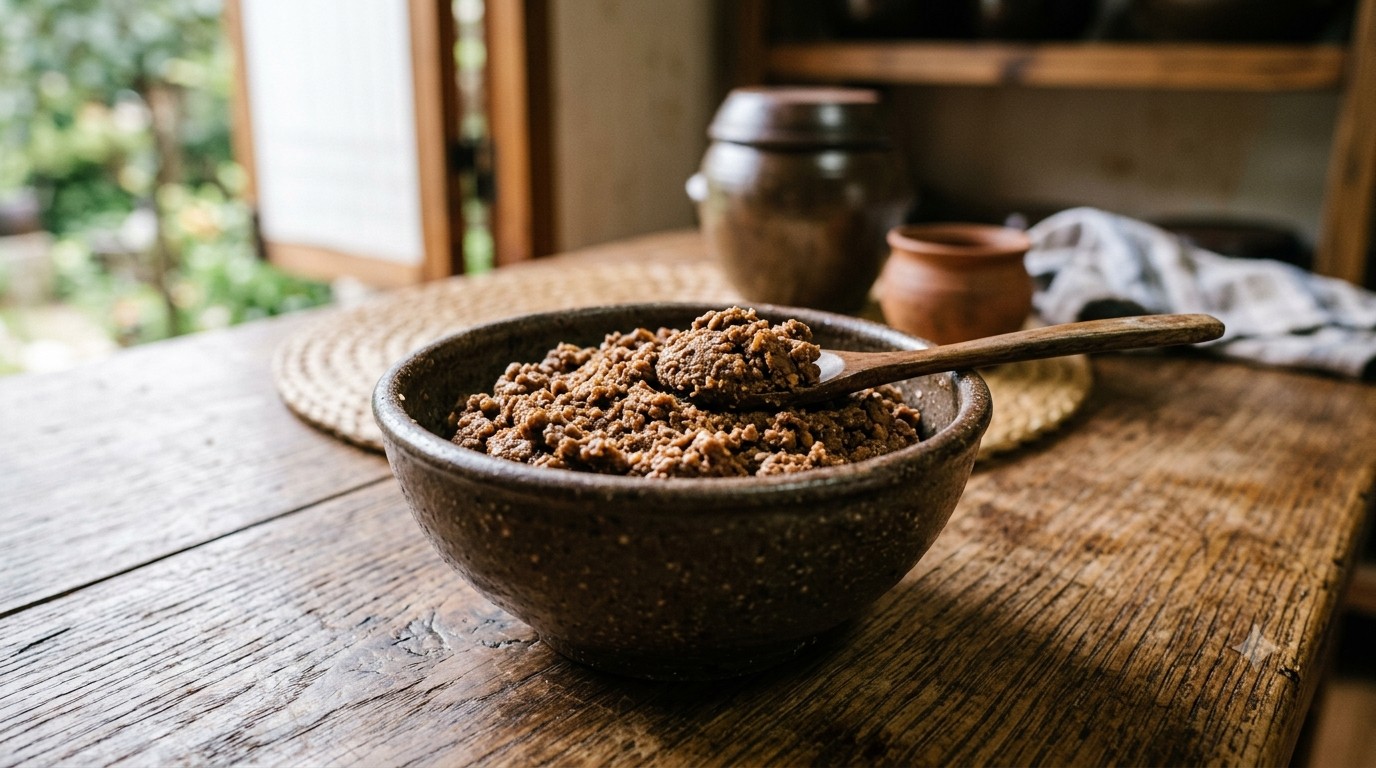
Doenjang is a rustic, thick, fermented soybean paste that delivers an unparalleled depth of earthy, savory, and complex umami.
Made by fermenting dried soybeans in brine for several months, it is a close cousin to Japanese miso but possesses a much coarser texture, a significantly saltier profile, and a far more robust, pungent aroma.
While Japanese miso is often pasteurized and mild, traditional Korean Doenjang is unpasteurized and packed with deep, fermented complexity that actually improves and deepens when subjected to prolonged cooking.
This ingredient is the star of the show when you want to create deeply comforting, earthy stews, or when you need to mask the gamey aromas of meats.
Its most famous application is Doenjang Jjigae (soybean paste stew), a daily staple in many Korean households.
To make a classic Doenjang Jjigae, you begin by boiling a broth of dried anchovies, kelp, and radish.
Once the broth is boiling, you scoop a generous tablespoon of Doenjang into a fine-mesh strainer and submerge it in the broth, using a spoon to press and dissolve the paste smoothly into the liquid.
You then add diced potatoes, onions, zucchini, and tofu.
As the stew simmers, the Doenjang melds with the vegetable juices, creating a rich, thick, and satisfying broth that pairs perfectly with a bowl of warm rice.
The most common mistake cooks make is substituting Doenjang with sweet, mild Japanese white or yellow miso.
Japanese miso is delicate and should generally be added at the very end of cooking, off the heat, to preserve its subtle flavors.
If you try to use it to make Doenjang Jjigae, the stew will turn out sweet, watery, and completely lacking the deep, earthy punch that defines the dish.
Another mistake is straining out and discarding all the soybean solids left in the strainer.
These small, fermented soybean bits are packed with concentrated flavor and provide a wonderful, rustic texture to the stew, so they should always be pressed through the strainer and incorporated directly into the boiling broth.
Chamgireum

Chamgireum, or toasted sesame oil, is a highly aromatic finishing oil that provides a rich, nutty, and velvety dimension to Korean dishes.
Unlike cold-pressed sesame oils which are light in color and mild in flavor, Korean Chamgireum is extracted from sesame seeds that have been deeply roasted before pressing.
This process yields a dark amber oil with a powerful, intoxicating aroma that can instantly elevate a dish from flat to deeply savory with just a few drops.
It is a key component of the signature aroma that wafts from Korean kitchens.
Chamgireum is almost always applied at the very end of the cooking process, serving as a finishing touch rather than a cooking medium.
It is essential for dressing Namul (seasoned vegetable side dishes), flavoring Bibimbap, and mixing into dipping sauces for grilled meats.
For example, when preparing Sigeumchi Namul (seasoned spinach), you blanch fresh spinach in boiling salted water for thirty seconds, immediately shock it in ice water, and squeeze out every drop of excess moisture.
You then gently toss the compressed spinach leaves with minced garlic, a pinch of salt, toasted sesame seeds, and a generous splash of Chamgireum.
The oil coats the leaves, locking in the moisture and delivering a rich, nutty contrast to the clean, mineral flavor of the spinach.
A major mistake is using toasted sesame oil as a primary cooking oil for high-heat frying or stir-frying.
Because the sesame seeds are already deeply roasted, Chamgireum has an incredibly low smoke point.
Heating it over high heat will cause it to burn almost instantly, destroying its delicate aromatic compounds, releasing bitter, acrid flavors, and producing harmful smoke.
Always use a neutral, high-smoke-point oil like canola or grapeseed oil for the actual stir-frying, and drizzle your toasted sesame oil over the dish only after you have turned off the heat.
Additionally, because sesame oil contains unsaturated fats, it can go rancid if exposed to direct sunlight and high heat for extended periods.
Store your bottle in a cool, dark cupboard away from the stove to keep it tasting fresh and sweet.
Ssal
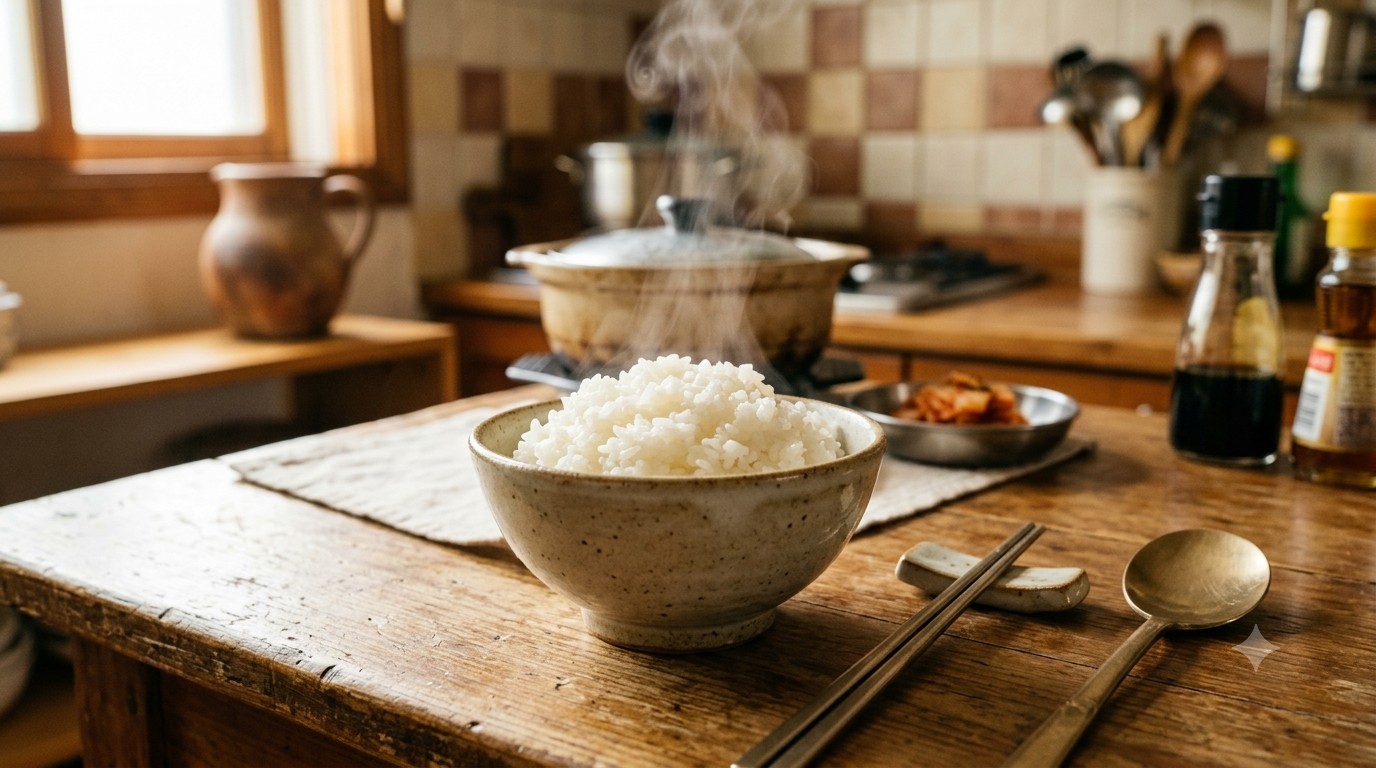
Ssal, or short-grain white rice, is the absolute foundation of the Korean table.
In Korean culture, the word for cooked rice (bap) is synonymous with the word for a meal itself, highlighting its central role in daily nutrition.
Short-grain rice is characterized by its plump, round grains that contain a high ratio of amylopectin starch.
When cooked properly, this starch structure causes the grains to cling together gently, creating a sticky, glossy, and slightly sweet texture that is easy to pick up with traditional metal chopsticks.
This sticky texture is not just a preference; it is a functional necessity designed to balance the bold, intense, and often spicy flavors of Korean banchan (side dishes) and stews.
To prepare Ssal correctly, you must wash the grains thoroughly in cold water.
You place the rice in a bowl, add water, and gently swirl the grains with your hand, which releases excess surface starch and turns the water cloudy.
You drain this cloudy water and repeat the process three to four times until the water runs mostly clear.
After draining, you let the rice soak in clean water for thirty minutes before cooking it in a high-quality pressure cooker to ensure each grain is perfectly hydrated, plump, and glistening.
A frequent mistake is substituting short-grain rice with long-grain varieties such as Jasmine or Basmati.
Long-grain rice is dry, fluffy, and cooking it results in individual grains that separate easily.
This makes it incredibly difficult to eat with flat Korean chopsticks, and it fails to provide the comforting, cohesive mouthfeel required to balance fiery stews like Kimchi Jjigae.
Another mistake is failing to wash the rice before cooking.
Skipping the washing step leaves a heavy layer of powdery starch on the surface of the grains, which yields a gummy, gluey, and overly sticky pot of rice that lacks the distinct, pearly definition of properly prepared Korean bap.
Mirim
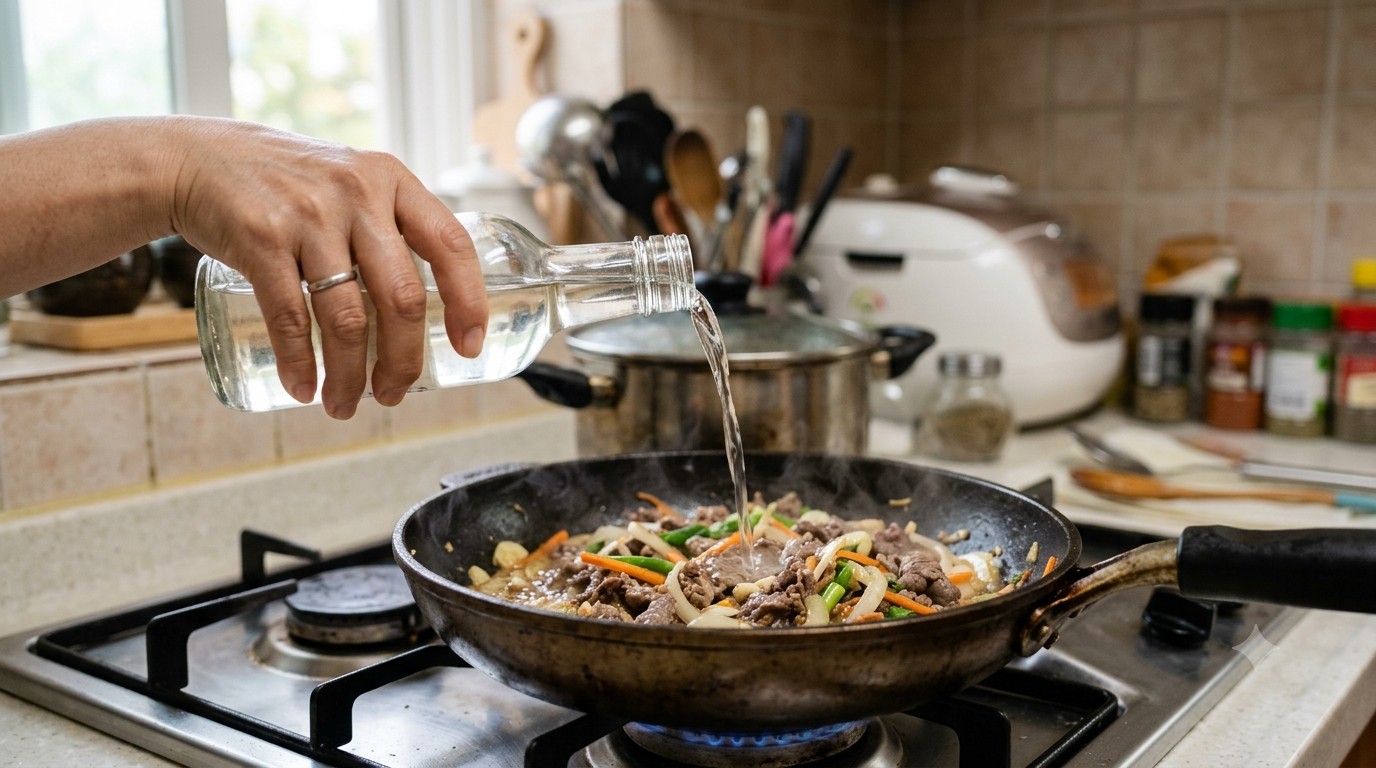
Mirim is a sweet cooking rice wine that plays a vital role in balancing flavors and refining the texture of proteins in Korean cuisine.
It is a clear, slightly golden liquid containing a low percentage of alcohol and a high concentration of natural sugars derived from fermented rice.
Mirim serves multiple functions in the kitchen: the alcohol content helps to eliminate gamey, metallic, or fishy odors from meats and seafood, while the natural sugars tenderize muscle fibers and add a beautiful, glossy sheen to cooked sauces.
You should use Mirim whenever you are marinating meats, braising fish, or preparing sweet-and-savory stir-fry sauces.
A classic example is marinating thinly sliced beef ribeye for Bulgogi.
In a large bowl, you combine soy sauce, minced garlic, sesame oil, grated Asian pear, and a splash of Mirim.
As the beef marinates, the alcohol in the Mirim works alongside the pear enzymes to break down the tough proteins, ensuring the beef cooks up incredibly tender and juicy, while the sugars caramelize beautifully when the meat hits a ripping-hot cast-iron skillet.
A common mistake is confusing Mirim with rice vinegar or regular white wine.
Rice vinegar is highly acidic and sour, and adding it to a marinade in place of Mirim will curdle the meat proteins and ruin the flavor balance of the dish.
Regular dry white wine lacks the essential sugar content and sweetness of Mirim, which will result in a flat, uncaramelized, and overly alcoholic taste.
If you cannot find Mirim, a better emergency substitute is dry sherry or sake mixed with a pinch of sugar, rather than any acidic vinegar.
Always add Mirim early in the cooking or marinating phase to allow the alcohol sufficient time to evaporate, leaving behind only its sweet, tenderizing benefits.
Mulyeot

Mulyeot, or Korean rice syrup, is a thick, translucent, and highly viscous liquid sweetener made from corn starch or barley malt.
It is highly valued in Korean cooking for its unique physical properties: it is less sweet than honey or granulated sugar, but it has an incredibly thick, sticky consistency that adds a dramatic, mirror-like glossiness to dishes.
It also acts as a binding agent, helping dry seasonings adhere to ingredients in stir-fries and braises.
Mulyeot is the secret ingredient behind the glossy, appetizing appearance of many popular Korean side dishes (banchan) and street foods.
It is essential for making Gamja Jorim (sweet soy-braised potatoes) and Myeolchi Bokkeum (stir-fried anchovies).
For example, when making Gamja Jorim, you simmer potato cubes in a mixture of water, soy sauce, and garlic until they are tender.
Just before the cooking liquid is completely reduced, you stir in a generous spoonful of Mulyeot.
The thick syrup coats the starch-laden potato cubes, transforming the thin cooking liquid into a rich, sticky glaze that clings to the potatoes, giving them a beautiful shine and a subtle, mellow sweetness that doesn't overpower the savory soy sauce.
A major mistake is substituting Mulyeot entirely with granulated white sugar.
While sugar will make the dish sweet, it lacks the viscosity needed to create a thick, clingy glaze, and it can easily scorch, burn, or crystallize under direct heat, leaving your dish dry and bitter.
Another common error is adding Mulyeot too early in high-heat stir-fries, such as when making stir-fried anchovies.
If you add the syrup to the hot pan at the beginning of the cooking process, the heat will cause the sugars to dehydrate and harden, turning your delicate anchovies into a solid, tooth-shattering block of candy once they cool.
To avoid this, always stir in your Mulyeot at the very end of the cooking process, preferably after turning off the heat, utilizing the residual heat of the pan to distribute the syrup evenly.
Maesil Cheong
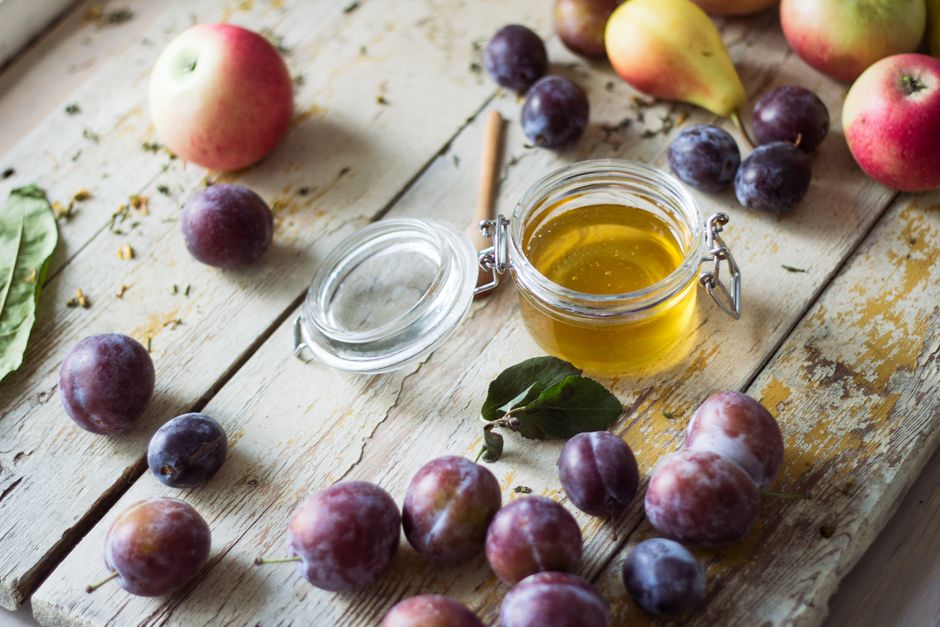
Maesil Cheong, or green plum syrup, is a highly versatile, fragrant sweetener made by fermenting fresh green plums (maesil) with equal parts sugar over a period of ninety days.
During this slow fermentation process, the plums release their natural juices, creating a dark, amber-colored syrup that boasts a complex flavor profile of bright fruitiness, deep sweetness, and a refreshing, tangy acidity.
In addition to its culinary uses, Maesil Cheong is celebrated in Korean households as a natural digestive aid and a powerful meat tenderizer due to its high concentration of citric acid and natural enzymes.
This syrup is an excellent addition to marinades, salad dressings, and cold dipping sauces where you want to introduce a subtle, fruity sweetness and a touch of bright acidity.
A perfect scenario for using Maesil Cheong is making Pa-muchim (seasoned green onion salad), which is traditionally served alongside rich, fatty meats like grilled pork belly (Samgyeopsal).
To make the dressing, you whisk together Gochugaru, toasted sesame oil, a splash of soy sauce, and a spoonful of Maesil Cheong.
You then toss this dressing with thinly julienned green onions.
The natural acidity of the plum syrup cuts through the sharp, spicy bite of the raw onions and cuts the richness of the pork belly, while its complex sweetness balances the heat of the chili flakes.
A frequent mistake is treating Maesil Cheong as a direct, one-to-one substitute for regular white vinegar.
While the syrup does contain natural fruit acids, it is primarily a sweetener.
If you use it to replace vinegar in a recipe without reducing the other sugars in the dish, your final creation will turn out cloyingly sweet and lack the sharp, clean acidity required.
Conversely, do not use it as a simple syrup substitute without accounting for its distinct, tangy plum flavor, which can clash with dishes that require a neutral sweetness.
Lastly, avoid boiling Maesil Cheong vigorously for long periods, as excessive heat will destroy its beneficial live enzymes and dull the delicate, bright fruit aromatics that make it so special.
Bokkeumchamkkae
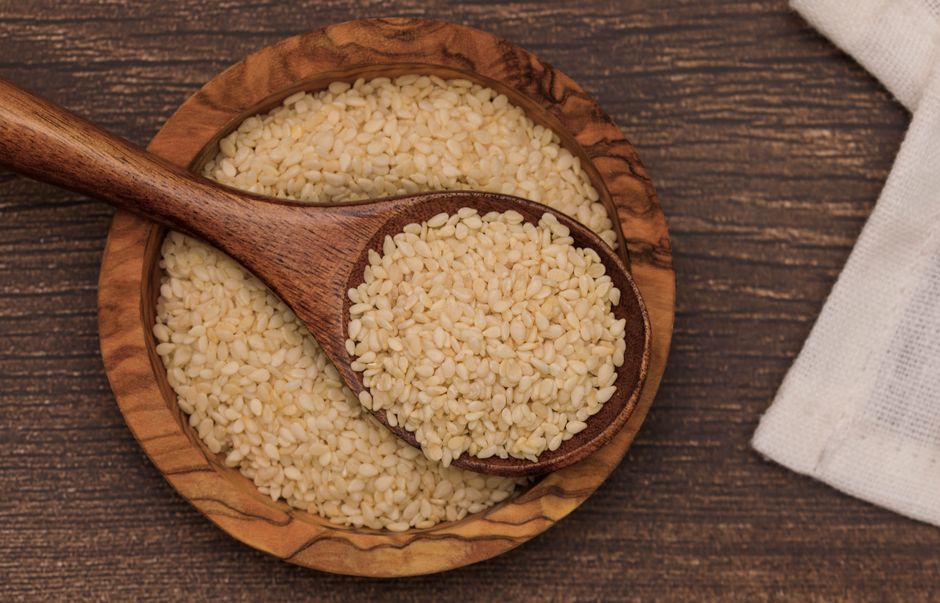
Bokkeumchamkkae, or toasted sesame seeds, is the ultimate finishing garnish that graces nearly every savory dish in Korean cuisine.
These tiny, golden-brown seeds undergo a careful roasting process that coaxes out their natural oils, transforming them from bland, flat seeds into crunchy, intensely nutty flavor bombs.
In Korean home cooking, a dish is rarely considered complete without a final, artistic sprinkle of these toasted seeds, which provide both a visual contrast and a satisfying textural pop.
You should use Bokkeumchamkkae as a final flourish on everything from stir-fried glass noodles (Japchae) to seasoned spinach, stews, and dipping sauces.
For instance, when assembling a fresh plate of Japchae, you toss the warm sweet potato noodles, stir-fried beef, and colorful vegetables together in a large bowl.
Just before transferring the dish to a serving platter, you sprinkle a generous tablespoon of Bokkeumchamkkae over the top, tossing lightly.
The seeds stick to the glossy, sesame-oil-coated noodles, ensuring that every single bite delivers a subtle, nutty crunch that cuts through the rich, savory sweetness of the dish.
The most common mistake is buying raw, untoasted white sesame seeds and using them directly as a garnish.
Raw sesame seeds have a pale, off-white color, a soft, papery texture, and a grassy, slightly bitter flavor that adds nothing positive to your dish.
If you accidentally purchase raw seeds, you must toast them yourself before using: place them in a dry, oil-free skillet over medium-low heat and toss them constantly for three to five minutes until they turn a light golden brown and release a fragrant, nutty aroma.
Another mistake is storing your toasted sesame seeds in a warm, damp spice rack near your stove.
Because sesame seeds contain high amounts of natural oils, exposure to heat, light, and moisture will cause them to oxidize and go rancid quickly, developing a harsh, soapy taste.
To keep them fresh, crisp, and fragrant, store them in a tightly sealed, airtight container in a cool, dark pantry, or better yet, keep them in the freezer.
답글 남기기